Showing posts with label Instructional. Show all posts

Tuesday, July 12, 2011

Talkin' Shop Tuesday - Metal Finishes and Wire Varieties

Jewelry - Metal Finishes and Wire Varieties

Today's post is a discussion of some of the more common metal finishes seen in jewelry. I'm also going to delve into some of the different wire types that are often the most important "structural" components of jewelry design. Let's look at some terms used to describe metals or metal finishes first. I"ll try to include a photo of a jewelry piece with each term so you can easily see what I'm referring to!

METAL FINISHES

(These are only a few of the more common ones - it is by no means a full list!)

Love N Luck from mysticwynd

 
Anodized Aluminum or Titanium - Anodizing is an electrochemical process in which an oxide layer is formed on the raw metal allowing the surface to accept dye. This process hardens the metal and protects it from corrosion. After the anodizing is complete, the metal can be dyed. It has the look of gold or silver, but will never tarnish and is extremely lightweight and comfortable to wear. 
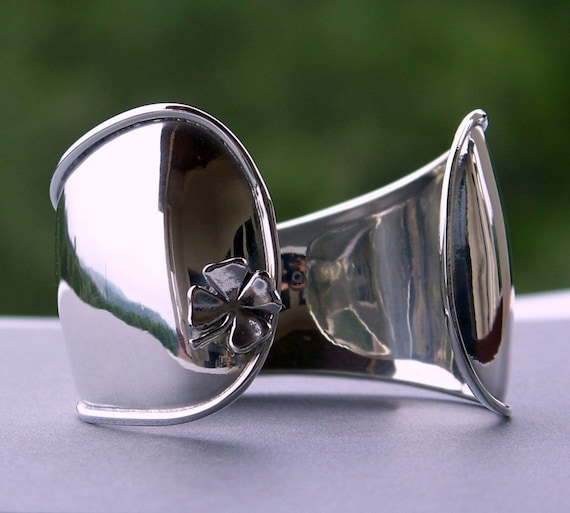


Lucky Charm Cuff Bracelet
from happymaxdesigns


High Polished or Mirror Finished gives the metal that highly-reflective and shiny look of elegant fine jewelry through machine and/or hand polishing.
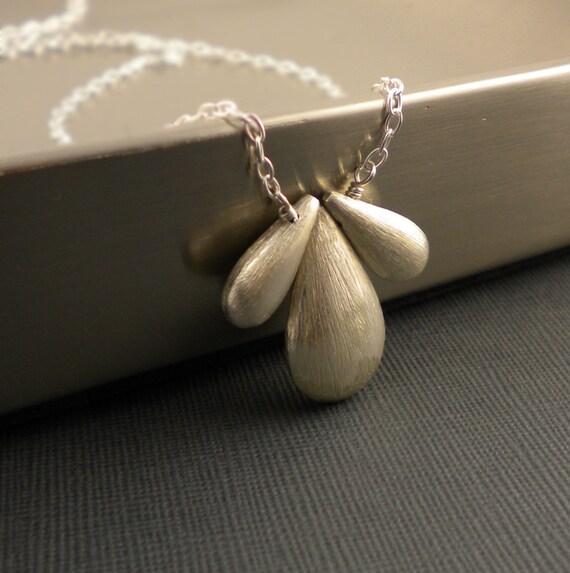


Silver Lotus Petals necklace by Camla


Brushed/Satin Finish - Texturing technique using a series of tiny parallel lines scratched into the surface of metals with a wire brush or polishing tool.
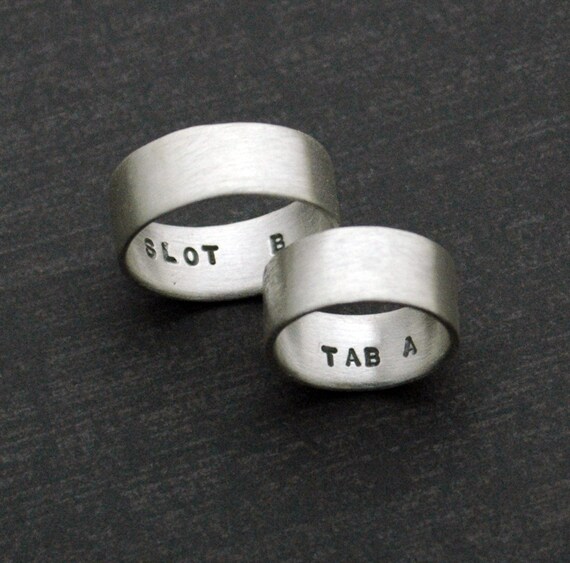


Secret Ring from PlyEffect


Matte Finish - A matte finish is an even texture resulting in a non reflecting surface on the metal. This can be accomplished by sandblasting or acid dipping.
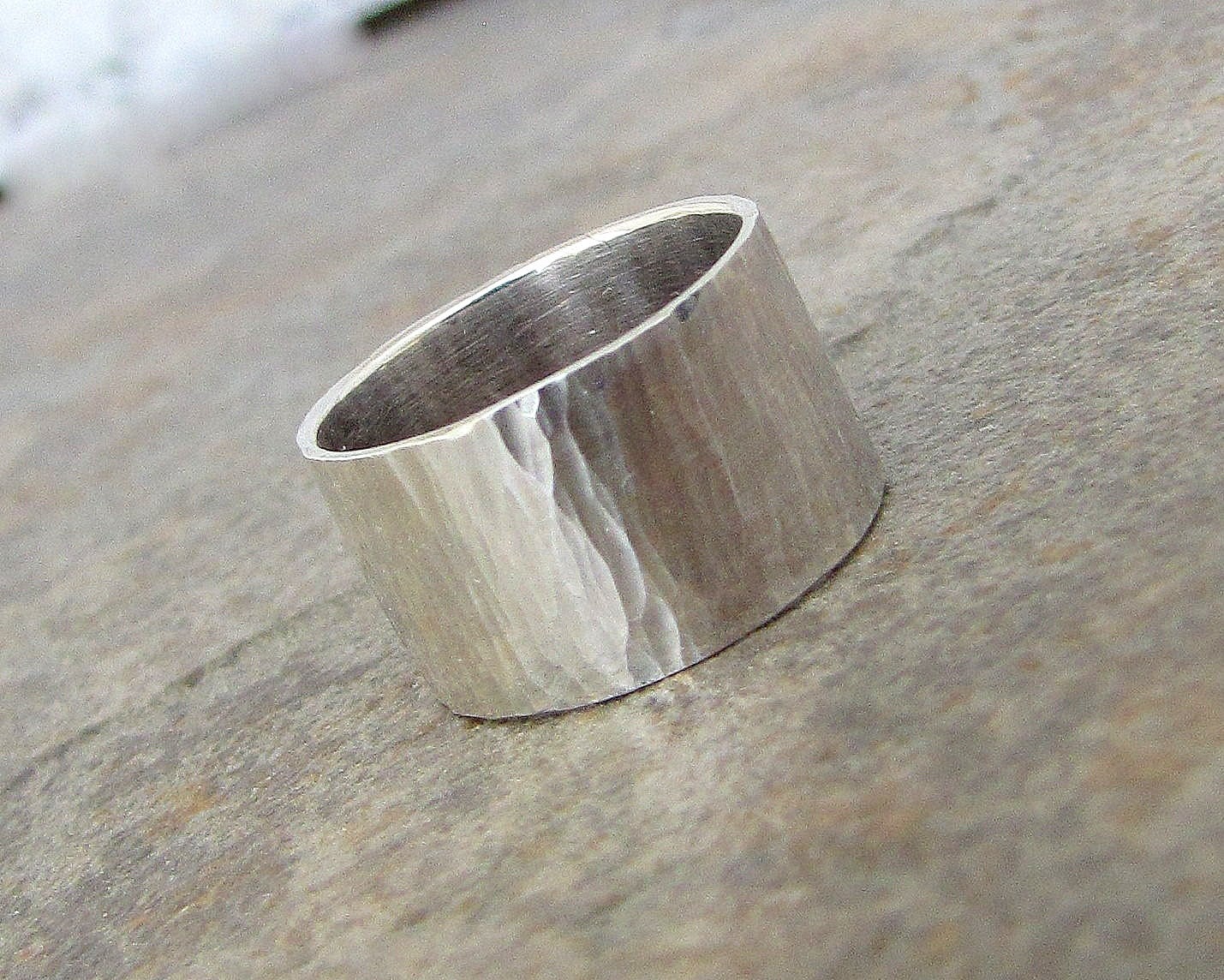


Waterfall Sterling Silver Ring
by SilverSmack


Hammered finishes are typically created by using a soft, rounded hammer and hammering the jewellery to give it a wavy texture.
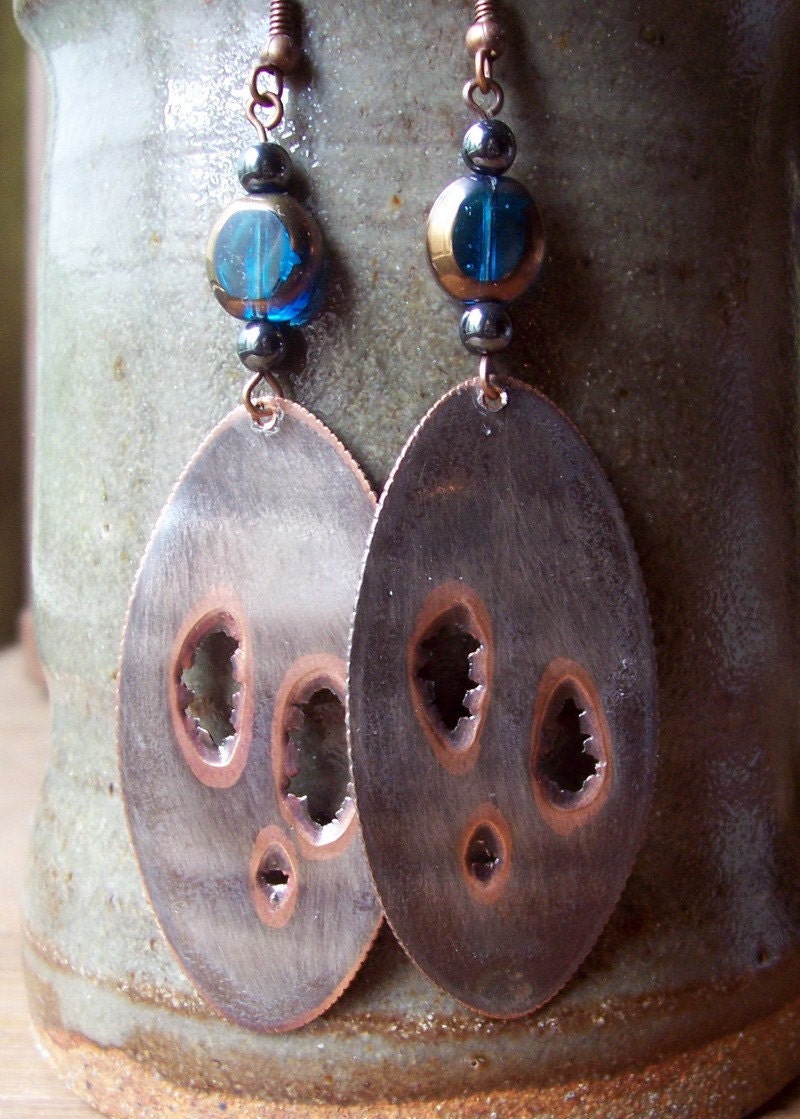


Celtic Earrings
by Gaelic Forge
Burnishing, in jewelry metalworking, is a process by which a smooth hard tool or metal pellet is rubbed against the surface of the item to be polished. This process flattens the high spots by causing plastic flow of the metal. Most burnishing is done using a tumbler filled with metal shot, burnishing compound and distilled water. It can be used on oxidated metals as well as non-oxidated metals to produce as shiny a finish as desired.


WIRE COMPONENTS USED IN JEWELRY

I'm going to give you some basics relating to the terms used to describe wire that is often used in the making of jewelry. Again, this is by no means a complete list, but should cover the more common terms you might run into.

In general, any type of plated wire (gold plated, sterling silver plated, nickel plated) is simply a thin layer of that particular metal alloy over a base metal usually of brass or copper. Gold filled wire is also a layer of gold alloy over usually brass, but the layering of gold is approximately 100 times thicker than with plated wire. Sterling silver wire generally is pure sterling silver with no inner layer. Copper, brass and bronze also normally are pure versions without an alternate metal core.

One of the most recent entrants into the array of wires used in jewelry design is Niobium wire. Niobium is a shiny-white, soft, metallic chemical element, which looks like steel in its unpolished state and like platinum in its polished form. It resists corrosion and is completely hypoallergenic, making it a popular option for people with allergies to other metals. It is stronger than most wires, making it a bit harder to work with than say, sterling silver half hard wire. Anodizing Niobium creates a wide variety of colors, but it is important to note that the colorization is a coating and scratches or nicks will mar the continuity of the color, although the color will not fade with normal care. It is also relatively expensive in comparison to sterling silver or other fine metal wires.

Memory Wire is a flexible treated steel wire that comes pre-shaped in circles. You can find it in sizes for rings, bracelets (large and small) and necklaces (large and small). It can be natural (looks like steel) or it comes in both gold and silver plated finishes. It is somewhat rigid and springs back to its original shape when expanded and then released.

Beading Wire comes in two forms - coated and plain. As the name implies, it is used for beading small holed beads such as seed beads, bugle beads, crystals, etc. The coated version usually It consists of a core of intertwined strands of steel coated in nylon. Plain beading wire is often a very fine gauge (I'll explain gauge in the next section) similar to sewing thread. Both types of wire are subject to kinking although some of the high strand count coated wires resist kinking much better and drape very nicely.

Wire Gauge

Wire gauge simply refers to the thickness of the wire. The higher the number of the gauge, the thinner the wire is. It is common to see wires from 9 gauge to 36 gauge used in a variety of methods in jewelry design, the thicker wires being used to frame, say, jewelry cuffs, and the thinner wires for intricate wrapping. For jewelry making purposes, 20 gauge wire is a very commonly used wire for shaping components that need to hold their shape under normal use, such as clasps or wire wrapped pendant bails.

Wire Hardness

All metals have a property called hardness. This refers to their resistance to bending. (Many people over 50 have the same type of resistance when it comes to bending over to exercise...hehehe).

Most jewelry wire is sold now as either dead soft, half-hard, or hard.

Dead soft wire is extremely soft and pliable. It can be easily bent and is excellent for making rounded shapes including a spiral. The disadvantage of using soft wire is that the finished piece can be bent out of shape if not handled with appropriate caution.

Half hard wire is slightly stiffer than dead soft wire. Half-hard wire is better for making tight, angular bends, for making loops in wire, and for wrapping wire around itself. Components made with half-hard wire are usually more permanent than pieces made with soft wire. Half-hard wire does not do a good job of making spirals.

Hard wire is very stiff and tends to spring back after being bent. Hard wire will not make a spiral. The advantage to using hard wire is that the wire components made out of hard wire are difficult to make but very permanent.

Wire Shape

Many people do not realize that not all wire is round. The shape of the wire refers to the shape of its cut end. Available cuts are round, half round (like a half moon), and square. The decision on what shape of wire to use is usually governed by the effect desired. Square wire can be twisted to produce beautiful visually appealing effects.

Well, that's it for this post. I hope you've got a better understanding of some of the finishes that are available for jewelry pieces and that now you will understand a few of the terms that you keep running into in Etsy (and other jewelry retailer) descriptions!

Friday, July 17, 2009

The Psychology of Buying...

This is the first in a series of articles on marketing in the online marketplace. I'll be looking at things from all sides - delving into pricing, promotion, and product choices ... and definitely looking for your opinions! What is the magic ingredient that really drives success when it comes to a "successful" sales process? Or is it basically just luck of the draw? Like most other people with a product or service to sell, I often find myself overwhelmed by the number of "sure-fire" plans to assure success, simply for the reason that they're sometimes so completely dissimilar!

So, today I'd love to share your input -from a BUYER's perspective. What seals the deal for you? If you find something you love, will you shop around until you find the absolutely best price you can? Are you an impulse buyer or do you carefully plan your purchases? Do the words "Free Shipping" or "Sale" make you pull out that credit card without comparing prices or looking at quality? Are you wary of shops with prices that seem too low? Too high? If you're a seller yourself, do you take into account all of the costs of doing business (supplies, time, marketing, shipping, packaging) when determining what a "fair" buying price is? Do you prefer the "little extras" like gift boxes or freebies or discounts for returning customers even tho they may ultimately drive the prices a little higher overall? Or are you a bare-bones buyer who'd rather pay less for a quality item without all of the marketing bells and whistles? Is buying local important to you? Do you like clear, concise, technical descriptions of products or do you "connect" with the product (and its seller) through a more personalized description? Do you feel quality is necessarily contigent on perceived cost of components? Do you shy away from certain words or material descriptions? Do you ask questions if something is unclear? Would you prefer to "keep looking" if you don't find something that fits your exact needs but is very similar, or would you approach the seller to find out if an item can be customized? What one thing will drive away your business?

I (as well as everone who reads this from a seller's perspective) would love the feedback, so please leave a comment and let the world know what matters to you as a buyer... and check back in a couple days to see what my own personal buying habits are when I discuss them as well as your responses!!!

Wednesday, April 29, 2009

A Seed-y Subject

Seed beads... those teeny-tiny wonderful little beads that add color and texture and versatility not only to some very beautiful and unique freeform jewelry designs, but also to gaments like evening gowns and bridal gowns, and a huge assortment of accessories from bridal veils to headbands to beaded bags and beyond.

The history of this little bead is pretty amazing. While modern mass production of seed beads began in Venice in the late 1400's, the earliest mass-produced seed beads were the Indo-Pacific beads of India and related places. They dominated the bead trade for nearly 2000 years. There is also evidence of small beads in King Tut's tomb - placing them back 4000 years. In more modern history, these beads were used as "currency" by English traders when trading with natives from the Americas, African and other colonies around the world.

Seed beads come in a wide variety of shapes and sizes, although the common use of the term refers to tiny rounded or tube shaped beads. Sizing is done in "aughts" altho, surprisingly I wasn't able to find a standard definition of exactly how the measurement "aught" was actually derived. While the notation still is used in seed bead descriptions (ie 15/0, 6/0) beads sizes are considered in how many beads are in a linear inch. The largest of the standard seed beads is 6/0 with approximately 10 to an inch. The most common seed bead size in use is an 11/0. The tiniest seed beads ever manufactured, a 24/0, measures approximately 50+ to an inch. Seed beads measuring smaller than 15/0 had stopped being produced in the early 1900's although there are many still in existence as vintage beads. Recently, however, there has been development of micro-seed beads which measure at 18/0.

On a broader level, seed beads come in a variety of shapes. The following terms are used to describe these different types of beads:

Seed - Broad term for any small glass beads
Rocaille - Round seed bead made of hard (non-lead) glass
Bugle - Tubular seed bead of soft (lead) glass, usually not rounded, also comes in a twisted version
Charlotte - Rocaille with ground facet(s)
Macca, Cut Bugle - Bugle with hexagonal section, usually black
Two-cuts (hex cuts) - Short segments cut from maccas, also comes in a twisted version
Three-cuts - Two-cuts faceted by grinding
Ceylon Pearl - Made of alabaster glass, either lined or dyed, then lustered
Delica - Most uniform seed bead, short cylinders; computers used in manufacture
Square - reflect light in every direction and add interesting dimensions and texture when mixed with round beads
Triangle - catch and reflect additional light, adding extra sparkle and a more angular, modern look to your designs
Fringe/Magatama - These Glass Beads are almost drop shaped, but not quite. They are really a round bead with an off-center hole. They make great texture when used for bead embroidery and can be used in place of the traditional teardrop shape for many other uses.


Seed beads also come in a variety of finishes:

Transparent - the glass is see-through
Translucent - one can see light through the bead, although the light is diffused
Opaque - the solid color prevents light from passing through the bead
Matte - the bead is textured on a microscopic level to result in a matte finish
Silver-lined - a silvery coating which reflects light is applied to the inside of the seed bead
Copper-lined - a coppery coating which reflects a reddish light is applied to the inside of the seed bead
Bronze-lined - a bronzy coating which reflects a brown light is applied to the inside of the seed bead
Luster or lustre - a rainbow effect applied to the surface of the seed bead
AB or aurora borealis - also a rainbow effect applied to the surface of a seed bead

Seed beads are produced in many countries around the world, with Japanese Delica beads being considered the gold standard.


Jewelry designs using seed beads range from simply strung strands to extremely detailed and intricate patterns. Some of the more popular stitching patterns are the peyote stitch, herringbone, right angle weave, brick, square, ladder, chevron, and spiral stitch amongst others. The beads can also be woven into metal crochet or virtually any other type of woven or strung design.

Working with seed beads is painstaking and requires patience and skill to maintain uniform tension. It is also one of the most beautiful types of jewelry you will ever see, made even more so when you consider that the number of beads that must be individually handled to create some of the more intricate designs is in the tens of thousands!

I hope you've enjoyed my foray into the world of seed bead jewelry and will take a moment to click on some of the photos and explore the beauty of this wonderful jewelry art.

Thank you to the following stores for the use of their photos in this article!
Floral Necklace-Black Onyx - tavikon
Wired pearls - theBeadAerie
Brown Beaded Bangle Bracelet - rlscreations
neptune's treasure - theBeadAerie
Hemlock Wreath Reflecting Mountain Stream - Giftbearer
My Blueberry Spring - koalabei
Green and Black weaved Bracelet - aznbiotch
As You Wish Necklace - tethyis
Oceanic Pearls - MourningWoodDesign
Coral, Mauve and Raku Swirl Necklace and Bracelet Set - debbaworks

Monday, April 27, 2009

Not your ordinary jewelry

Happy Monday! This week, I'm going to devote a few articles to some unique jewelry - not the type of designs you would find in your typical jewelry store! Some of them are more "regional" favorites, and some of them are just very kitschy, artsy, or unique in that they are created from materials that the average jewelry buyer wouldn't associate with jewelry. I think you are in for a real treat with most of these things.

Let it never be said that there is anything that a creative Etsian can not use, reuse, recycle, repurpose or put to good use for something other than its original purpose. Today, I'm going to take a look at some jewelry that is based on paper goods. I browsed a variety of shops on Etsy and picked these beautiful pieces to share with you. So as you read along, pick out your favorites and visit their shops to find out more about these wonderful pieces!

Origami is the ancient oriental art of paper folding. Translated into a jewelry medium, origami techniques have been used to develop durable, water resistant, lightweight and beautiful designs. Most designs are created from either beautiful chiyogami, kami, or washi paper, although other papers may also be used. The artisans who create this type of jewelry practice great attention to detail and are painstakingly careful about properly finishing their designs with a number of glazes and finishes to make their jewelry a delight for years to come.

Paper Collage - What do you get when you create something using a framework covered with a collage of recycled paper? Or you create a collage of materials over drawings and prints on silk paper, and perhaps layer it with Swarovski crystals and finish it with enamel? Well, if you're as talented as some of my fellow artisans, you'll get something as stunning as these amazing bracelets.


Resin/Glazed Mounted jewelry included a wide variety of backings from the currently popular Scrabble tile jewelry to lovely chiyogami paper or even unique paper scraps mounted on sterling silver or leather. Paper is cut and mounted to the backing and then coated with a glasslike layer of resin, or a sturdy glaze, to produce a simple design available in an incredible variety of motifs and themes.


Quilling, or paper filigree, is another decorative paper technique that has been around for centuries. Decorative designs are created throught the use of strips of paper that are rolled, shaped, and glued together to create decorative designs. The paper is wound around a quill to create a basic coil shape. The paper is then glued at the tip and the coil is shaped. These shaped coils are then arranged to form flowers, leaves, and other ornamental patterns. The finished result is similar to ironwork. In jewelry making, Quilled pieces are then treated with a sealant like lacquer or varnish to make them durable and water resistant.

Laminating refers to the placing of something (in this case a paper cutout) between layers of plastic and sealing them with heat and/or pressure, creating a tight, water resistant seal. This type of jewelry design results in durable, lightweight earrings and pendants that come in an array of designs that is only limited by the number of pictures and patterns available to the designer.

I am sure there are probably many more beautiful and imaginative jewelry creations out there which have their basis in paper. I just haven't had the time to go thru all of the listings on Etsy yet! But I hope you'll take some time to browse thru these stores as well as the thousands of other Etsy shops and see what unique items you'll find.

I'd like to thank the following shops for the use of their pictures to pretty up my blog today!

Vintage Paper Bundle - ReduxPapers
Peace Crane Oragami Earrings - SmuTopia
Twin Origami Crane Pendant - Lucky Stars Origami
YUZEN WASHI ORIGAMI PILLOW EARRINGS - Zcat Studio Creations
Recycled Paper Cuff - Artistic AYA
Collage Bangle with Pink Roses - BijouxbyJacqui's
Bride Of Frankenstein Style A Glass Tile Pendant - LaughingVixenLounge
MIZUKI - Yuzen Washi on suede with Black Tourmaline Bracelet - Zcat Studio Creations
The White Bindweed Fairy Flower Fairy Pendant - twobadbananas
ROMANTIC ROSE - TwirledTreasures
Lime and Blue Butterfly Necklace - BNDesign

Tuesday, April 21, 2009

A Rose (quartz) By Any Other Name...


...would still be rose quartz! Today I'm tackling the subject of those confusing names of stones that you may run across when searching for jewelry or supplies.

Just like "pate de foie gras" sounds much more palatable and decadent than "fatty ground goose liver", Mont Blanc Ruby sounds much more appealing (and expensive) than rose quartz. In reality, they are one and the same. In an attempt to romanticize gemstones and make them sound more alluring to potential customers, the jewelry industry has come up with an incredible list of confusing misnomers for gemstones. Add to that the fact that we have come to associate certain colors with the gemstones we originally named them for and it can make one's mind reel!

So... a few things to keep in mind when you're shopping for jewelry or supplies to create jewelry-

  • the use of a color in a description does not necessarily mean that it is made of that gemstone. For example, amethyst is a gemstone. It is also a shade of purple - although the gemstone is not always purple... and it is also a form of crystalline quartz. But amethyst crystal is - (drum roll please) - glass!

  • just like plant and animal life, minerals are classified by families. For those of you who may not be quite sure of what I'm talking about, it's kind of like a family tree. Take Mookaite (you) for example. It is a form of Jasper (Dad), which is a form of Chalcedony (Grandpa Jones), which is a form of Quartz (Great Grandpa Smith). While each level of the family has specific characteristics which differentiate it from other levels, all of the levels do have some of the same basic characteristics - just like you retain some of Great Grandpa Smith's genetic makeup. Chances are good tho, that you'd rather be labelled with his qualities that are more appealing or positive. You probably won't see many jewelry sellers labeling that piece of Jasper as quartz, but if they did, they would still be correct!

  • the use of a place name with a gemstone name in a description does not necessarily mean that it is either from that place or is that gemstone. A good example of this is Amazon Jade, which is neither from the Amazon, nor is it Jade. It is actually Amazonite which belongs to the Feldspar family and, by the way, also does not come from anywhere near the Amazon.


  • an exotic sounding name is often just that. Don't be afraid to ask the seller about the actual composition of the stone. They should be able to provide that information easily and if they can't, do some research on your own. There is a wealth of information available on the internet, at your library, or even at your local bookstore.

  • cultured pearls are real pearls. Freshwater pearls are real pearls. Tahitian black pearls are real pearls, although they're not always black (they get their name from the black lipped oyster that produces them). Faux, glass, mother of pearl, and Swarovski pearls are not pearls...it doesn't mean that they aren't beautiful, inexpensive and durable, tho. It just means that they are not real pearls!


  • Here's the links to a few websites with some interesting information, if you're inclined to learn more about the wonderful gifts from Mother Earth that we call gemstones.

    Misleading Gem Names - http://www.gemscape.com/html/misnomer.htm
    Pure Pearls -http://www.purepearls.com/pearls-2.htm
    Gemstone Characteristics - http://www.csgnetwork.com/gemchar.html
    Gemological Institute of America - http://www.gia.edu/research-resources/gems-gemology/index.html

    Starting Friday, I'm going to start doing a short daily "feature" of some great Etsy shops. I'm working on setting up something in the sidebar to give this feature a home, but I will keep you posted. I will continue to be using images from a variety of stores to illustrate my articles, but it's fun to get to know the "people behind the photos" on Etsy as well!

    Monday, April 20, 2009

    Flattery will get you... Sued????

    Today is National Look-alike day... a day to celebrate the fact that you look like someone else (a twin, a sibling, a parent, Uncle Ted, Aunt Cathy) or to put your best effort forward to look like someone you really admire. That brings me to the topic of this post - Flattery!

    There's an old saying that imitation is the sincerest form of flattery. I remember growing up and wanting to be just like one of my teachers who was soooo smart, and write just like one of my classmates (who had perfect handwriting), and wear my hair just like one of the teen idols of the time. I'd mention her name, but then I'd probably have to get her approval for this blog! We'll leave it at - she had a lot of brothers and a beautiful smile - and still does!

    How many of you have walked into a salon and told the stylist that you wanted a haircut just like (insert celebrity name here) and they mentioned how popular that style had become? Or bought a certain brand of purse, shoes, clothes, etc., because someone whose style you admired was making that same fashion statement?

    I am amazed by the number of lawsuits that are mentioned in the media nowadays regarding the alleged copying of ideas or designs or 6 note riffs in a song. I ran across an article in a relatively recent magazine that discussed the possibility of the fall of the Internet for the simple reason that we are quickly becoming a world of people who are so hung up on keeping everything we have ever thought, said, created, did, thought about doing... (you get the picture) private and secure and "ours" that pretty soon, no one will be able to legally post anything without a who's who of authorizations and agreements and other legal-eze.

    I guess I still ascribe to some pretty old fashioned ideas when it comes to such notions. Sure, I wouldn't want someone else trying to pass off something I created as theirs, or copying it down to the detail. But I do believe that in this world of nearly 6.8 billion people, there is room for some flattery - perhaps not thru imitation, but thru inspiration. I would love to think that something I've written, or said, or created, or posted on some silly blog page will inspire someone else to use their talents to write or say or create something equally valuable to someone somewhere else.

    Imagine what this world would be like if we could never take something from someone who came before us and recreate it, or improve on it, or yes, simply imitate it! It would definitely eliminate competition! But at what cost to the creative spirit...

    I envision a tribal chief coming forward accusing artists of stealing petroglyph designs, or a descendant of an ancient Greek architect claiming the rights to the magnificent columns designed by them. Extreme? Sure, but this has become a world of extremes in many ways. I also wonder where mankind will be in another generation at the current rate... I don't expect you to agree with me - in fact I'm sure alot of you will probably be on the opposite side of the fence! I appreciate you listening to my rant and would love to read your thoughts on this post! Now... I think I'll consider a job with the patent and trademark office...lol...there should be a great deal of job security there!

    As always, I hope you will check out some of the lovely pieces I've featured in this blog - just click on the pics and you'll be taken to their shops! Oh, in case you haven't figured out my reasoning behind selecting these items - they all have "look-alikes" in them! (and those donuts? They're really soaps - how cool is that?)

    Friday, April 17, 2009

    Gemstones and New Thoughts on Classification

    For the last few hundred years, gemologists have classified gemstones as either precious or semi-precious, but like so many other areas of debate, they didn't always agree as to what gemstones fell into what category. Classification had much more to do with ceremonial or historical significance of gems than their actual appearance.

    Traditionally, Diamonds, Rubies, Emeralds, Sapphires, Opals, and Pearls have been considered precious or cardinal gemstones. (Technically, pearl is not a gemstone, but it has been classified as precious.) Up until the discovery of a major deposit of Amethyst in the 19th century, this stone also was considered precious. And over the last century or so, a wider variety of stones such as aquamarine, peridot and cat's eye have been much more popular leading them to also be regarded as precious.

    Historically, semi-precious gemstones were of a wide variety including, but not limited to Garnet, Topaz, Jade, Onyx, Turquoise, Carnelian, Tiger's Eye and Agate.

    There has been a recent trend among gemologists and gemological associations to discontinue the use of this divisive method of classifying stones. The new way of thinking takes into account that scarcity, price, and popularity have much more of an impact on how "precious" a stone is, and that the use of such designations can be misleading, and inappropriate - not to mention downright inaccurate.

    I look at it this way - a beautiful piece of well cut Citrine with minimal inclusions can indeed be more beautiful than a yellow diamond full of inclusions, but of the same size and cut. Which should really be considered precious?

    With today's ever evolving techniques for stone cutting, enhancement, and creative jewelry design, the worth or prestige of a stone should never be limited by an archaic labeling system. Gemstones should be judged on their individual attributes and the sense of beauty they lend to the wearer.

    That being said, I hope you take the time to visit the shops of some of the wonderful Etsian's whose gemstones I've featured with this article - as well as my Etsy shop!

    Thursday, April 16, 2009

    Jewelry - All About Enhancements and Treatments

    Ever wonder how that piece of Turquoise in your ring got to be shaped so perfectly? Or why, despite all the matrix (those spiderweby lines throughout the stone), the stone isn't crumbling? My blog article today will help explain how and why turquoise and so many other gemstones have such a beautiful appearance. It's not just luck, or even an incredible job on the part of the lapidary!

    Life has been crazy-busy lately, but I wanted to take some time to post some information about gemstone enhancements and treatments.

    First of all, treatments and enhancements have nothing to do with whether or not a gem is a lab created gemstone or a synthetic gemstone. In fact, the terms really only apply to genuine gemstones. Gemstone treatment and enhancement has been practiced for literally thousands of years. The oldest known reference to it is in a document authored by Pliny the Elder, a Roman author and naturalist who died in the famous eruption of Mt Vesuvius which destroyed the city of Pompeii in AD 79. Some of those same treatments and enhancements are still in use today!

    While some enhancements can barely be detected, other treatments like heat treating and irradiation produce dramatic and beautiful changes. One example is the transformation of colorless topaz into beautiful blue topaz thru this process. Some gemstones, like yellow citrine, tanzanite and pink topaz would not be available at affordable prices if it wasn't for these treatments. In an ironic twist, natural gemstones that have not been treated, like unheated rubies and sapphires, have become much more expensive recently - not because they are more naturally beautiful, because they usually aren't, but because it is so rare to find an untreated ruby or sapphire.

    So... let's look at some of these treatments and enhancements.

    Heating - the most commonly used treatment, subjecting a stone to heating can dramatically changes the stone's natural color to make it lighter, darker, or completely different. A heated gemstone can only be detected by a trained observer in a lab. Some of the gemstones that are routinely heat treated are: zircons, citrine, rubies, sapphires, tanzanite, aquamarine, and pink topaz. Rubies that are treated with heat often develop tiny surface fissures which have to be subsequently treated with flux healing (the filling of a fracture with molten glass which bonds permanently with the stone).

    Dyeing - many of the gemstones available today, especially some of the newer cultured pearls, and onyx, chalcedony, and agate are routinely dyed. The dyes applied to these stones are very prevalent, very permanent and well received in the jewelry trade. Other gemstones that may frequently be dyed to enhance their appearance are jade, lapis, emeralds, rubies, turquoise, sapphires and coral. Caution should be used since sometimes, dyeing is used to disguise poor quality rather than to change or enhance colors.

    Impregnation and Stabilization - Impregnation is the infusion of paraffin or was into a porous material. Stabilization is the introduction of a bonding agent into a porous material and is the most permanent of these two methods. The most commonly used stabilizing agent is plastic. Turquoise is commonly stabilized, allowing it to retain its original color and luster. Opals may also be stabilized, but it is usually done to make a lower quality stone appear more beautiful.

    Irradiation - Irradiation is the process of pounding a material with radiation. It is sometimes followed by heating to produce dramatic color changes. Naturally off colored diamonds can be irradiated and then heat treated to produce intense colored diamonds in bright blues, yellows, pinks, browns and greens. Blue Topaz is probably the most commonly irradiated gem, although quartz and tourmaline are also frequently irradiated. In the US, irradiation is regulated by the Nuclear Regulatory Agency to ensure the gemstone's safety after treatment, but this protection is not guaranteed on gemstones bought from outside the US.

    Coating - This process involves the application of a lacquer or film to a gemstone to improve its appearance. Topaz is routinely coated, and tanzanite and opals are sometimes coated to improve their appearance and/or intensify their color.

    Filling/Infilling - Liquified glass, plastic or other materials are applied to gemstones with surface fractures or small cavities to correct these imperfections. This type of treatment is only detectable under magnification or dark-field illumination. Rubies, tourmaline, and diamonds are sometimes filled to enhance their appearance.

    Bleaching - Organic gem material like coral, ivory, pearls and bone can be bleached through a chemical process to lighten their color. This is a permanent and completely undetectable treatment.

    Oiling - This process involves colorless oil being pressurized into the surface fissures of a gemstone. Emeralds are routinely oiled. Any stone that has been oiled may need to be re-oiled if it is cleaned using ultrasound or steam.

    Lasering - Used primarily with diamonds, lasering involves drilling tiny holes into the stones to reach inclusions or flaws in the stone. The inclusion is then vaporized or bleached if it was not already corrected by the lasering.

    Composite Assembly - Assembled stones may be composites like doublets and triplets, or they may be foilbacks. A composite stone is two or three pieces of material fused or joined by colorless cement. Although any stone may be made into a composite, opals are the best-known. An opal triplet consists of a piece of good opal sandwiched between a top layer of clear quartz and a bottom layer of low-quality opal. A doublet is usually good opal underneath a quartz layer. The quartz helps protect the delicate opal. Composites also allow the use of gemstones too small to be used otherwise.

    Reconstruction/Reconstitution- Crushed, fragmented stone is mixed with a colorless acrylic resin and sometimes dyed to create a larger slab. While this contains genuine gemstone material, it is considered an imitation gemstone. Amber and Turquoise are the most commonly reconstituted gemstones.

    Keep in mind that not all gemstones need to be enhanced or treated. Peridot, Iolite, some Tourmaline, Hematite, and Chrysoberyl are examples of gemstones that are more likely to not require any of these processes. It's important to keep in mind that while some treatments and enhancements are acceptable and necessary to produce beautiful gemstones or unique colorations, they can also be used to disguise poor quality stones... although in my opinion, some stones are only enhanced by natural flaws and imperfections. You are the only one who can judge a gemstone's beauty for yourself - in this case, beauty is truly in the eye of the beholder!

    Thursday, April 9, 2009

    The Final Cut

    Well, I have returned - suffice it to say that this week hasn't exactly gone as smoothly as I like to see my weeks go. The good thing is that I spent some great quality time with my youngest granddaughters, but they kept Grandma busy! What little spare time I have had, I've had to use to play catch-up on some business related necessities and taking care of some unexpected, but definitely welcome design requests and sales! My customers must be getting their tax refunds back :)

    On to the topic of the day, gemstone cuts! I'm sure you're familiar with the 4 C's of Diamonds - Color, Cut, Clarity, and Carat weight. The same basic principles apply to most gemstones, and hopefully by the end of this blog you'll have a better understanding of not only the most popular cuts and shapes of gemstones, but you'll understand how the Color and Clarity helps determine the best choice of cut for any rough gemstone. I'm not ignoring Carat weight - I will also touch on the effect of a poor cut choice on the weight of the finished stone, but that is somewhat incidental to the real topic.

    I want to clarify something before we delve too deep. Don't mistake the "shape" of a gemstone with its cut. Shape refers to the face-up outline of the gem. In other words, if you're looking at the top of the stone, the "shape" would be the general form it takes. Most common is the round or oval shape, although there is more and more marketing of non-traditional shapes. Rectangle, triangle and pear shapes have been popular for awhile now, as well as marquise, heart and even cushion shapes. Today some gem-types are even left in semi-natural state, or cut in fanciful designs.

    The "cut" of a gemstone actually refers not to its shape as many people believe, but to its proportions, such as its depth and width and the uniformity of its facets--all characteristics that control brilliance, durability and other features we look for in a gemstone. There are three basic faceting cuts - the Brilliant cut, the Step Cut, and the Mixed Cut.

    Colorless, sometimes called White, Diamonds are the standard of color against which every other gemstone color is judged. These diamonds are unique in that their lack of color creates a maximum combination of three effects: brilliance (return of light), dispersion ('fire'), and scintillation (a twinkling effect). I think before I try to explain those effects, I need to familiarize you with some terms. Take a look at this diagram and refer to it if you need to.

    Brilliance is provided for the most part, by the pavilion facets. These catch the light rays and throw them back to the eye.

    Dispersion is a result of the prism effect of the crown facets. These split white light into its spectral components - similar to sunlight creating a rainbow.

    Scintillation is achieved by breaking large facets up into smaller ones during the cutting process to create a twinkling effect when either the eye, the light or the stone is moved.

    A well cut, quality diamond should easily produce all of these effects. Add color to the stone tho, and the gemstone's ability to disperse light is affected, which is why most colored gemstones are cut to show off their brilliance and scintillation. If you look closely straight down into most faceted colored gemstones, you will commonly see three different color variations in the stone. You will see the brilliant true color of the stone, slightly less brilliant areas and areas that appear dark. While these may be extremely minor differences in a well cut stone, in a poorly cut stone they can be very pronounced. This is usually caused by the pavillion facets being cut at too shallow an angle.

    This example will illustrate the difference. In the left hand stone, light is reflected back from the pavillion facets as brilliance. The right hand stone has much shorter pavilion facets - creating the effect of a "window" which allows the light to escape through the bottom of the stone, resulting in a much duller stone. Pavillion facets that are too long will allow light to escape through the sides of the stones, also dulling the brilliance. (Photo by Wimon Manorotkul/Palagems.com.)

    A skilled lapidary will study a stone's shape, color, size, inclusions (the small imperfections that exist in virtually every natural stone), and whether it is transparent (light travels easily through it), translucent (light shines thru it, but not as "cleanly" as through a transparent stone), or opaque (light is blocked by the crystalline structure of the gemstone). By taking all of these factors into account, the lapidary will then be able to choose a cut that will highlight the qualities of that particular stone to their greatest extent.

    Combining the right "cut" with the right "shape" is what makes the difference between say, a very refined and glamourous cocktail ring or wedding set with its finely cut stones, and an earthy uncut gemstone, popular in today's wire wrapped and very naturalist styles of jewelry.

    Here are some examples of Gemstone shapes:

    Round Brilliant cut - also known as the Round cut, American Ideal cut or American Standard cut. The standard number of facets for this cut is 57. The Round Brilliant cut is designed to provide maximum optics for brilliance and scintillation, making the gem sparkle and dance in the light. While this cut was originally developed especially for diamonds, it has become a common cut for all gem types.

    Oval cut - has an elliptical shape when viewed from the top and the ratio of the length to the width should be approximately 2:1 A well cut Oval gemstone can be nearly as bright as a Round Brilliant cut. The standard number of facets of an Oval cut gemstone is 69.

    Baguette - is from the Italian word “bacchetta”, meaning “rod or stick” - this is one of several oblong shapes used for gemstones. Most oblong cuts are “step” cut, which means that the facets on the pavilion have been cut in steps, parallel to the edges, in the manner of a pyramid with its top chopped off. The base and table are square with triangular facets. The approximate number of facets of a Baguette cut gemstone is 20.

    Square shape -another step-cut oblong shape used for gemstones, however, unlike the Baguette, the sides are equal in length. The standard number of facets of a Square cut gemstone is 57.

    Trillion shape - based on a triangular shape. Usually with truncated corners and displaying a variety of facet designs, this cut creates a spectacular wedge of brilliant fire. The tips and culets of Trilliants are pointed and thin. While many jewelers prefer to bezel set this shape, prongs that protect the tips work well and show more of the gem. Because of their equilateral form, Trillions return lots of light and color and are considered nearly as brilliant as Round cuts, so they are a great choice for people who like brilliance but want something other than round. Trillions work well with light-colored gems like Diamonds, Aquamarines, Beryl’s and White Sapphires. These are stones that, because of their light color, can be cut to maximize brilliance. This cut is also often used to lighten and brighten the appearance of darker gems such as Tanzanite, Spessartite Garnet, Rhodolite and Amethyst.

    Pear Shape - this mixed cut shape combines the Oval with the Marquise, its shape resembling a teardrop. The standard number of facets of a Pear cut gemstone is 71.

    Octagon shape - The standard number of facets for this gemstone cut is 53.This is another “step” cut but with the four corners cut off. Color tends to show very dramatically in Octagon cut gemstones.

    Emerald shape - looks like a rectangle from the top. The approximate number of facets of an Emerald step cut gemstone is 50. The Emerald cut was developed specifically for Emeralds to reduce the amount of pressure exerted during cutting and to protect the gemstone for chipping as well as to highlight the dramatic color of the gem. Today, it is used for a wide variety of gem types.

    Marquise or Navette shape - has the appearance of a long pointed oval (similar to a football or rugby ball). The standard number of facets of a Marquise cut gemstone is 57 and the ratio of length to width is ideally 2:1. Shallow cutting stones in this shape can lessen their brilliance, so look for stones that don't let too much light shine thru the bottom.

    Antique Cushion (Old European, Pillow) shape - in appearance resembles a cross between a large faceted cut that was popular in the late 19th and early 20th centuries and the modern oval cut. This cut will maximize a gem's luster.

    Princess cut (Square Modified Brilliant cut) is a square version of the Round Brilliant cut with sharp, uncut corners. This shape is usually deeper than most other shapes in order to maximize the brilliance of the stone. It generally has 76 facets. Originally devoped for diamonds, the Princess cut generally works best with lighter colored transparent gemstones.

    Heart Shape - a pear-shaped gemstone with a cleft at the top and 59 facets. Its length to width ratio is slightly over 1:1, approximately 1.1:1 in favor of length, but usually not over 1.2:1. Hearts have to be extremely well cut which makes them more expensive because the cutting process results in a greater loss of rough stone.

    Briolette shape - the most difficult to cut, the briolette is a pear shaped gemstone covered with facets that comes to a pointed end. The approximate number of facets of a Briolette cut gemstone is 84. The more facets the drop has, the more brilliant it is. The Briolette cut is a drop-shaped gemstone with triangular or diamond shaped facets all the way around. There is no table, crown or pavilion. Because of the specific number of cuts to show the facets, the Briolette cut must be perfect from top to bottom.

    Cabochon - a polished gemstone with a flat-bottom (or slightly rounded bottom) and a convex or rounded domed top. The traditional Cabochon is an Oval but Cabochons can also be fashioned into virtually any other shape. Commonly known as Cabs, this shape is the oldest and most common form of gem cutting. Gems cut “en Cabochon” are shaped and polished, rather than cut. Cabs are usually created from gems of limited transparency like Turquoise, Jade, or Agate, or heavily included relatively opaque Sapphires, Rubies or Emeralds, or for gems where the cut’s curved surface accentuates special characteristics - like tiger's eye, star sapphires, cat's eye

    Buff Top Cabochon - A Cab variant for transparent gems, this cut mixes a faceted cut with a non-faceted cut. This results in a gem with the typical domed top of a Cabochon and a faceted pavilion, giving the illusion of depth as the eye is drawn into the centre of the gem. The cut shows good brilliance and has a crown that is less easily abraded than those of faceted gems.

    Fancy Cuts

    In an effort to create a constant stream of new designs, unique shapes, and to find ways to bring out even more brilliance in gemstones, lapidaries are constantly experimenting with new cuts and shapes. There has been an incredible increase in these "Fancy Cuts" over the past few years, as customers search for that special one-of-a-kind gemstone. The possibilities, just like with most other aspects of jewelry design, are limitless. These are just a couple of fancy cuts that have found their place at the top of the list of newcomers.

    Millenium - a cut created for the new millenium in 1999, this shap possesses an unbelievable 1,000 facets. This is a very rare cut.

    Concave cut is a three dimensional conical shaped facet applied to the pavilion of the gem that creates depth as well as length and breadth. Instead of the facets being joined by an angle they are joined with a groove. This third dimension allows the gem to refract more light, thereby maximizing its brilliance. The Concave cut also distributes light more evenly, giving the gem an even interior glow. This cut usually works better with lighter stones than darker ones.

    You'll find many of these lovely gemstone cuts and shapes throughout the great jewelry shops on Etsy, but here are just a few of my favorites!


    Related Posts with Thumbnails